HyPRNN
Published:
Microstructure-Conditioned Surrogate Models for Graded Multiscale Optimization of Mycelium Composites
This work was performed in collaboration with Iuri Rocha, Sarah Schyck, Kunal Masania, and Frans van der Meer.
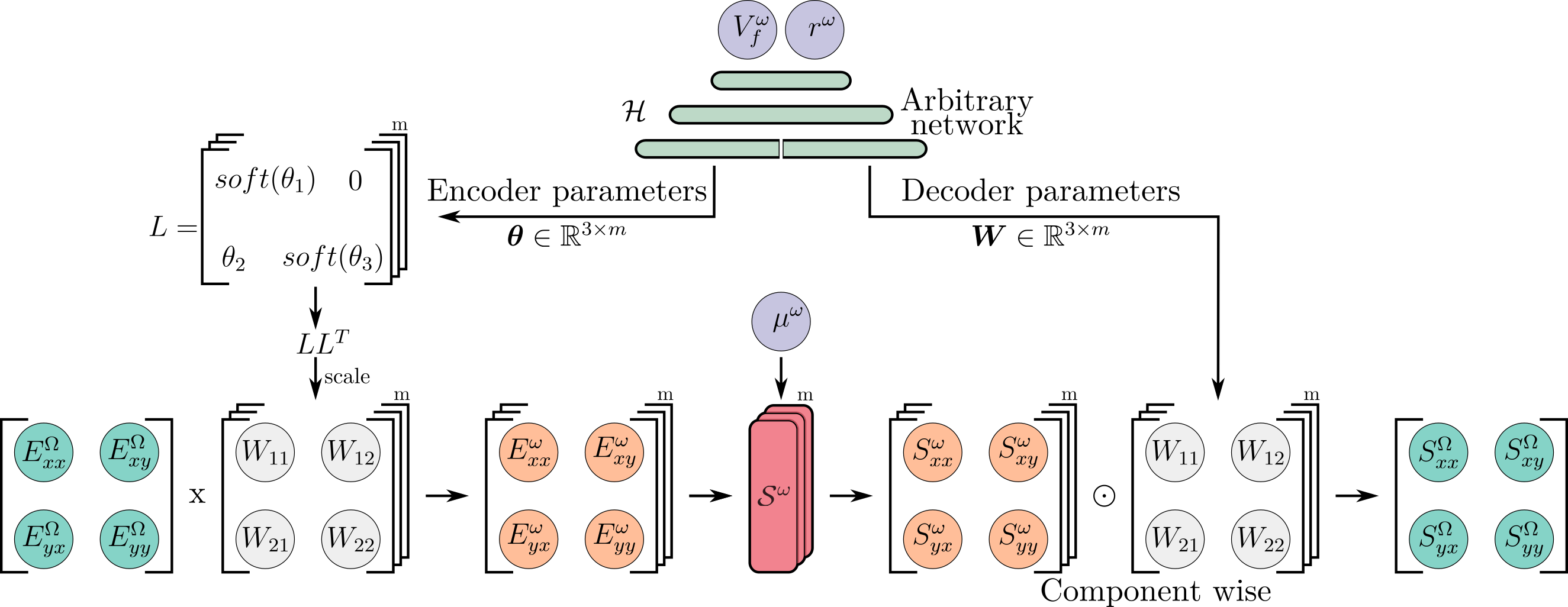
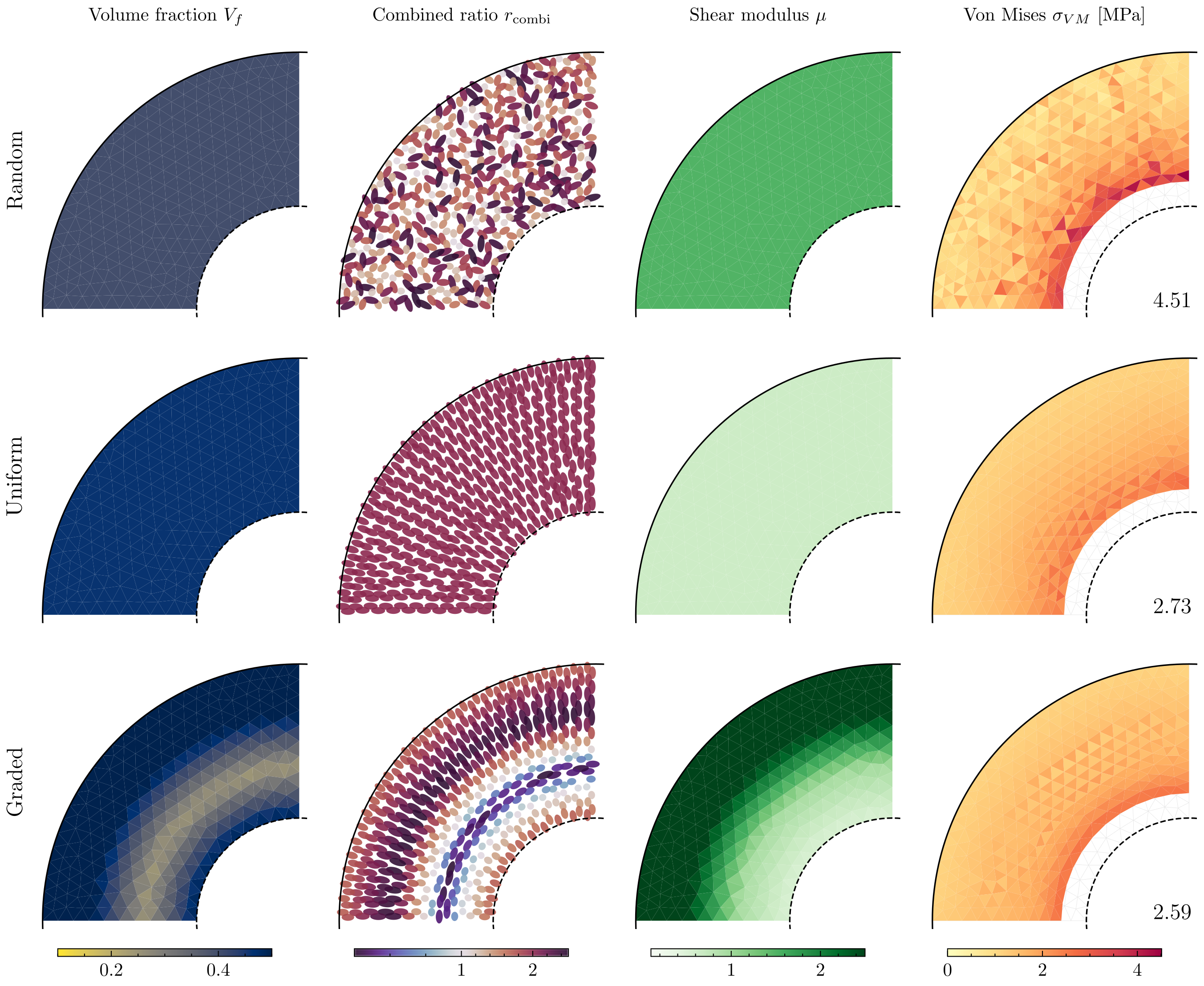
Multiscale optimization of microstructured sustainable materials needs surrogate models, but training one across a range of microstructures normally demands prohibitive amounts of data. The work solves this by conditioning a hybrid physics-data surrogate on microstructural variables through a hypernetwork, a HyPRNN, which stays accurate on small datasets and is validated against a full FE² simulation of a mycelium-woodchip composite. Applied to a functionally graded disk it cuts peak stress by 42% versus a random microstructure, and conditioning directly on manufacturing variables extends the approach into a practical route for engineering the microscale to hit target macroscale behavior.
Link to preprint: https://arxiv.org/abs/2607.13688
GitHub Repository link: https://github.com/JoepStorm/HyPRNN
Multiscale optimization
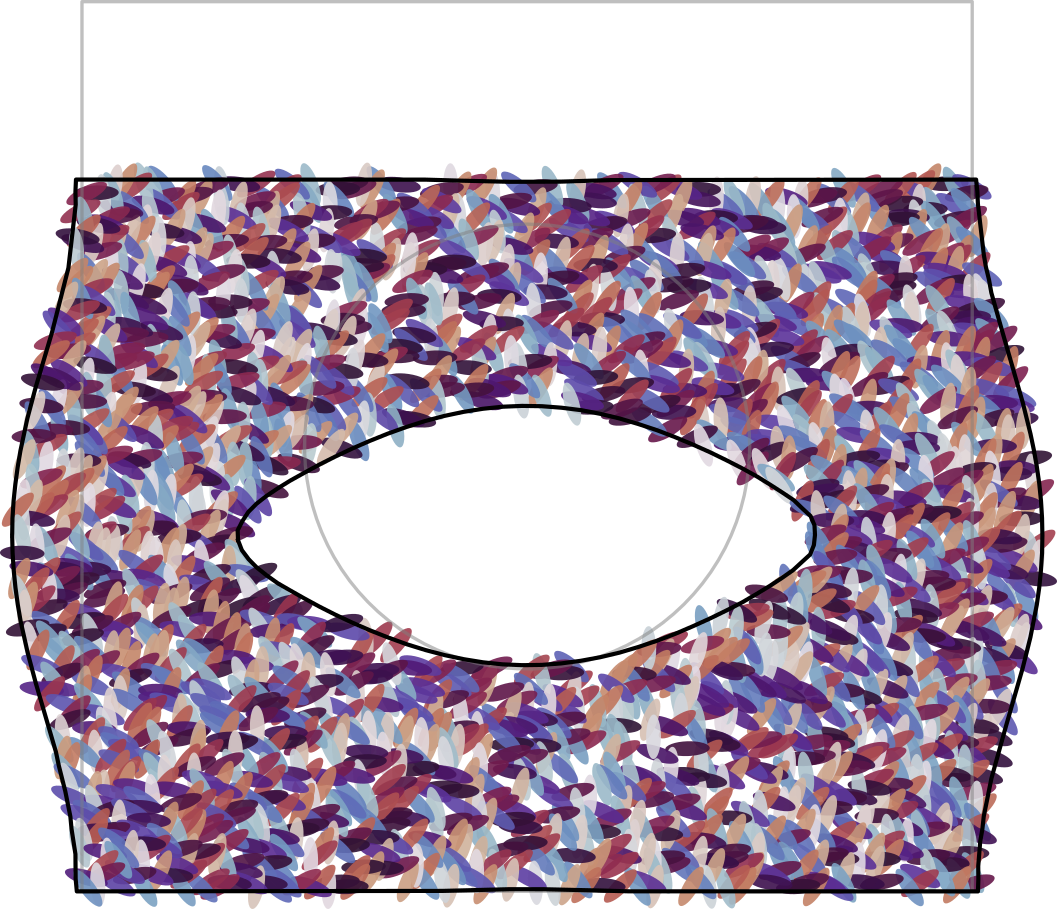
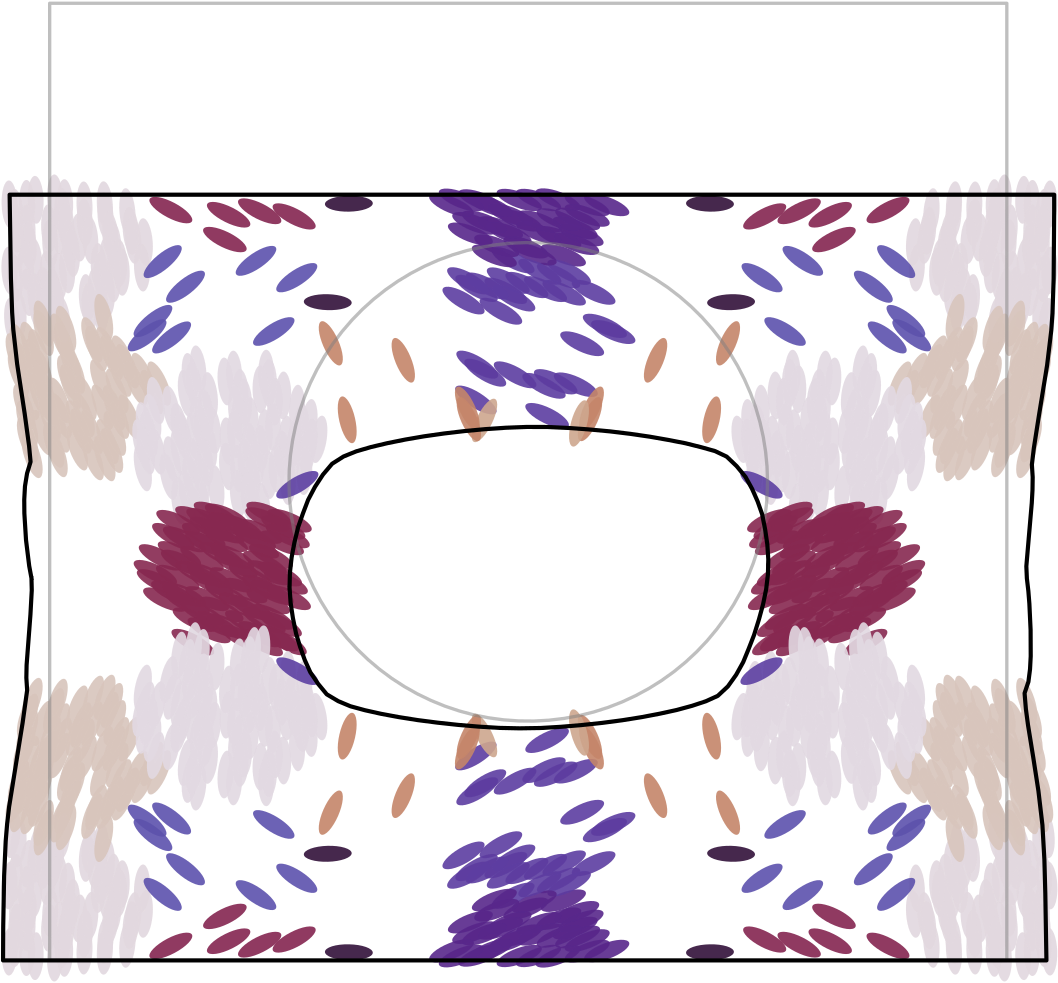
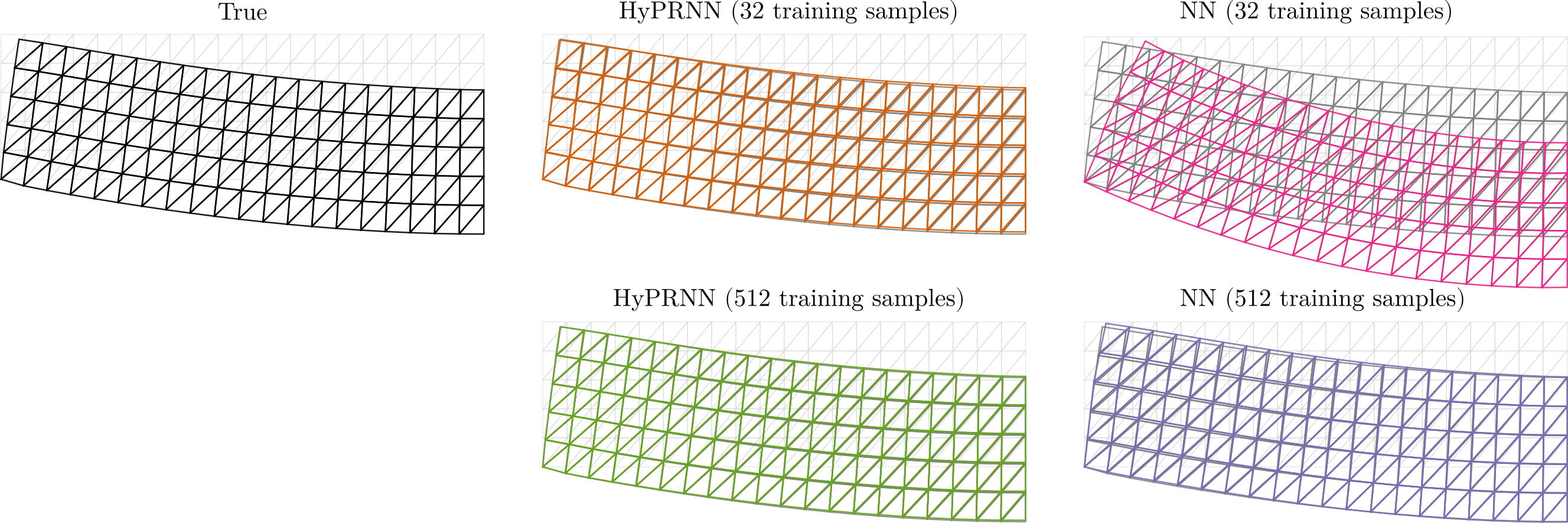
The HyPRNN makes accurate predictions based on only 32 training samples. We validate this in an FE² simulation
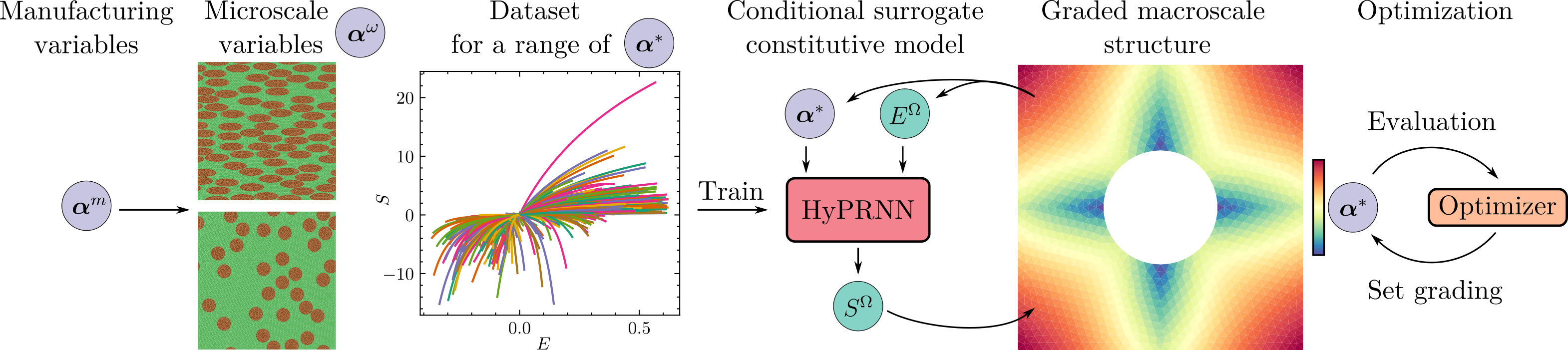
With a well-trained surrogate model, we can run multiscale simulations in seconds. This allows for optimizing the microscale variables:
Conditioning on microscale variables
Parametrizing the microstructure is challenging, and some other works resolve this by, for example, training a variational-autoencoder to capture the microstructure, and conditioning on the latent space. We avoid this complexity by instead conditioning directly on manufacturing variables. This is possible by simulating how the manufacturing properties affect the resulting microscale. We do this using a discrete-element simulation.
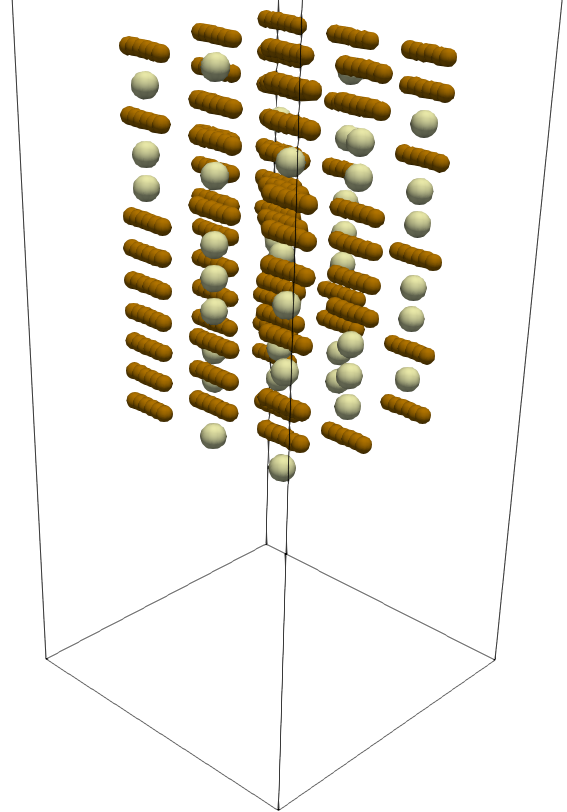
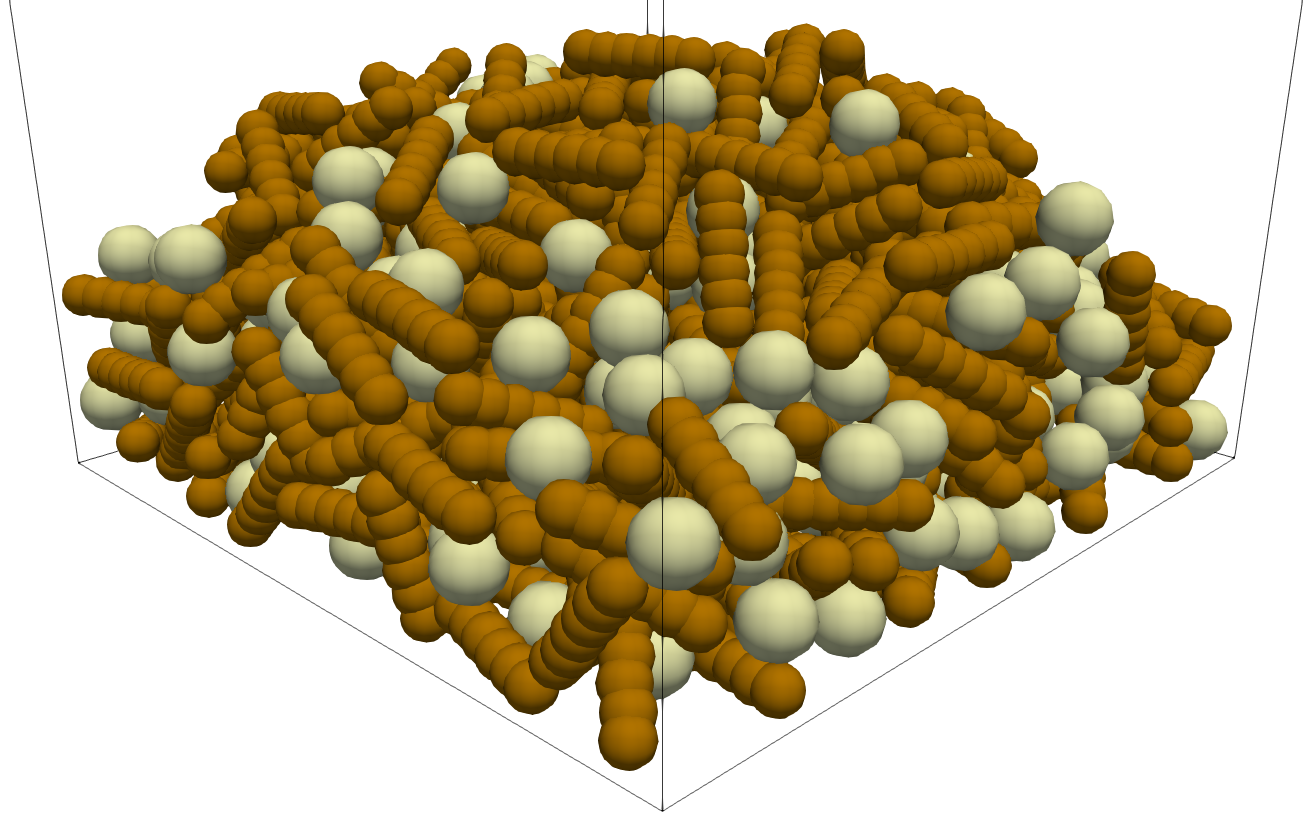
This allows realistic optimization of multiscale simulation, such as to control the macroscopic deformation.